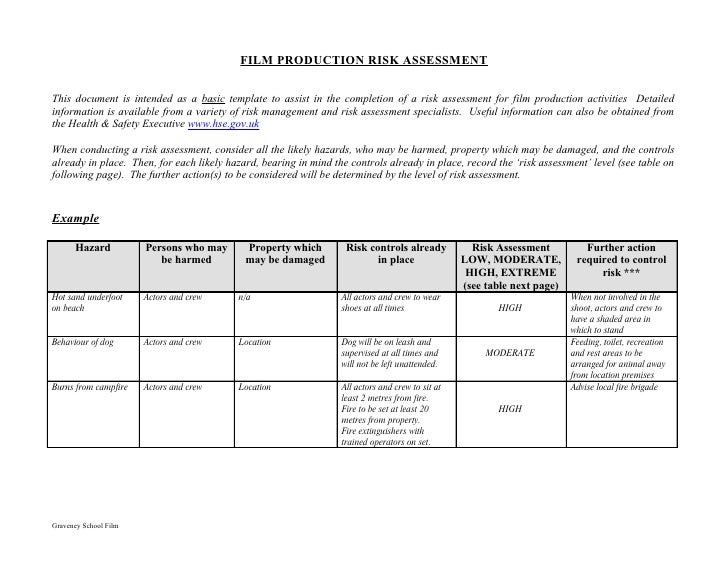
In order to make a film you need to do a lot of planning. The planning includes starting of with a script basically you need to write everything that is going to be said in the film and plot out what characters will be saying what and include stage directions if needed of where the actors have to stand. You also need to complete call sheets to hand out to all the people involved in the film so they know locations and date's and contact information if they cannot make rehearsals. You also need to make a budget on how much can be spend on your film so you can't go over that money budget. You also need to complete a risk assessment so everyone know's the risks in the are they are working and what to do if they experience one of these risks. A story board needs to also be completed so you know what scene is first and what is last and also include clearances.
What is a script?
A script for a movie is written work, it can be original work or a modification from existing pieces of writing. The movement, actions, expressions and dialogues of the characters are narrated and one page usually equates to one minute of the movie.
What is a budget?
A film production budget determines how much money will be spent on the entire film project. It involves the identification and estimation of cost items for each phase of film-making (development, pre-production, production, post-production and distribution)
A budget is used in the film industry to make sure they don't spend to much money on thing's they don't need to, it works out how much money is needed to spend on the film.
for example the budget for Billy Elliot was £3 million ($5 million)
What is a story board?
A storyboard is a plan, a way of figuring out the story of the film before you put in the enormous amount of work of the animation itself. Basically it is the story of the movie drawn in pictures, very much like a comic strip.
It is created so it breaks down the movie into characters, props and backgrounds so all the people that are working within the movie will know what the film is actually going to be about.
What is a call sheet?
For each day of production on a film or TV show, the production coordinator creates a “call sheet’ which is distributed to each member of the cast and crew. A call sheet contains a list of all the scenes that will be shot that day, which actors will be needed, which sets, props or locations will be used and the names of every member of the cast and crew that will be working that day.
This one document provides all the necessary information that will keep us organized and on task for the day. It is absolutely essential to helping the production run smoothly and effectively. What is a risk assessment? A process of evaluating the potential risks that may be involved in a projected activity or undertaking. Basically in the film industry a risk assessment will be done to outline all the problems that could occur when filming for example camera wires need to be tucked away so actors or anyone at all don't trip over.
What is clearance? Film clearance is the process of acquiring the required permission for all aspects of a film production. The necessary clearances can include sets, actors/extras, music, stock film, art, posters, products/brands, books, broadcasts, computer programs, dramatic works, photographs, etc. Film clearance is necessary to avoid liability, acquire E/O insurance, and avoid any general copyright/trademark issues. So basically before creating a film we do all these processes so the film has no problems when being produced it is essential to do all this before because if you don't them the film has no starting off point.
Editing has many purposes, including telling a story, creating a mood or creating atmosphere, all leading to the success of a film/video.
Editing concepts
introducing new information:
A new shot should always present some new information to the viewer. In a motion picture, this may primarily be visual information (a new character / a different location) but it may also be aural (voice over / narration / important sound).
Editing is one of the most important steps in making a film it is essential for creating the desired mood, atmosphere and theme wanted by the director.
Motivation:
The new shot you cut to, should provide new information, but so should the shot you are cutting away from.
For example, a shot of a man looking in the air in amazement, then the scene cuts to a shot of another man flying.
Why edit?
To make sure everything makes sense, and all the mistakes are corrected so the film or video is presentable.
you need to arrange clips in order to make the film or video make sense for example using the 180 degree rule to help the scene make sense again
Providing smooth,seamless continuity across transitions is a very important element in an edit and also making sure the sequence make sense throughout, whilst keeping the scene interesting.
Editing
The purpose of editing
The purpose of editing is to show four different aspects of a film/clip that can emphasize the characters, the information the audience receives engaging them into the film in several different ways that include how much the audience should know about the narrative, characters and events at any given time.
For example in relation to genre specifically horror, the camera may role much longer and there will most likely be very low tempo sound where as in an action film there will be a lot of quick clips of explosions and loud music playing in the background as the suspense builds.
Also another example that falls under propaganda film is football highlights by that i mean that if Arsenal played against West Ham and Arsenal dominated the game and had a lot more possession and shots, the football highlights may show the game and make it look like it was an even match by putting even chances for both teams, however really it was no where near an even match.
Pace and rhythm
Pace of cutting is used to control the tension of the scene.
The more cuts per minute the faster the pace.
This is an action film which shows the pace of the film is going to be really fast because it is action packed, cars flying about all the time and then next there is a film called PS I love you which is a romantic film so it will not be as fast and wont have as many cuts.
Combining shots into sequences to engage the viewer.
In the flesh is a really good drama I watch I have screen shot some of the shots out of the programme.
This shot is a close up and when watching the programme it shows that the boy is scared to go out in public because he is a zombie but the girl also in the shot is to and she's not scared at all. The HVF posters are included in this shot because the public are trying to help support the HVF which is people that have been infected by these zombies.
What genre do you think this clip is?
Comedy obviously..
What genre do you think this documentary is?
Romance...
It is important for the film/documentary/drama to make sure the audience know's the genre.
DEVELOPMENT OF EDITING
Editing has allowed films now a days to grow and become more interesting for audiences through aspects as camera, angles, narrative, actors and many more.
Thomas Edison ran a film laboratory where the kinetographic camera and the kinetoscope were invented he developed the 35 mm film strip that came to be the industry standard and also eventually developed the projector to play it.
George Melies was a magician who had seen the films made by the Lumiere brothers, he saw at once the possibilities of a novely more than just motion its self, he acquired a camera, built a studio, wrote scripts, designed sets and soon he discovered the exploited the basic camera tricks we know so well today. Sadly it never occurred to him to move the camera for close ups or long shots and so his work was soon overlooked, the commercial growth of the indutry forced him out of business in 1913, and he died in poverty, elements of his life are depicted in the recent film HUGO.
Thomas Edison worked with Lumière Brothers and produced short films that were one long, static, locked down shot, motion in the shot was all that necessary to amuse an audience, so the first films simply showed activity such as traffic moving on a city street, this can be seen in the film "sortie d'usine (1895) by the Lumière Brothers. In 1895 the Lumière brothers invented cinematographe which was a three in one device that recorded, captured and projected motion picture.
The first film camera's where a roll of film moved frames mechanically moved past a shutter and lens system were invented in France by the Lumière brothers and in America by Thomas Edison, at about the same point in history
Example of a silent film
dited in camera means that the film is created by shot by shot, in the camera. You add the next shot in the story by filming it next.
The idea of recording to something other than film (video tape) was invented in 1951 by the Ampex research team. The first video editing machines came into existence a few years later in 1956
Analogue editing - analogue editing was used before editing on a computer. The film negative when completed was cut down and pasted into an order. It then went through a machine such as moviola or K.E.M. In the early days of movie production the idea of cutting up film and taping it back together to edit it was developed for many years this process was done by hand with just a pair of scissors and a magnifying glass. The first mechanical editoring decks used to cut up and reassemble movies were invented by Iwan Serrurier in 1924. He founded the Moviola company.
This technique of cutting film and reassembling the pieces. Whether done by hand or with the help of a machine is called "linear editing" it is called linear simply because you are assembling the clips one after the other. The process is purely mechanical.
Digital editing - editing with a computer is much faster and more efficient for film. Many different programs can be used as final cut pro, adobe premier and imovie. Footage is put onto the timeline and is then cut and pasted into an order and then effects are added.
Editing in camera still exists as a way of creating films since 1999, straight 8 has challenged anyone anywhere to make in-camera edited short films on super 8 mm cine film
This below is an example of a 1903 editing in camera movie. From 1920 until the end of the second world war, film editing was done almost exclusively on Moviola decks. Then in 1945 the German company Steenbeck introduced their machine Steenbeck rapidly became the industry standard.
By watching this it shows editing in camera allowed film makers to do more than just show the world from one point of view.
summary
thomas edison - devoloped the qequipment need to develop moving pictures.
The lumiere brothers - pioneered the art of moving film.
George melies - was one of the first to use in camera editing.
GA smith- pioneered the technique of using shots from different locations and devoloped filming making from single shot films.
Porter, pathe and griffith developed the art of story telling through editing. They made popular the art of splicing individual shots together in order to make longer more dramatic films.
CONVENTIONS AND TECHNIQUES
This is an example of a reverse shot using the 180 degree rule it shows two people talking face to face and the camera will be moved from the face of one person to the reverse view of the person they are talking to
This is an example of a montage in the film it is a sequence used to show a characters development through time.
Basically on premier pro you set in and out points by double clicking on a clip, that will then load the clip onto the source panel on the left then move the play head underneath the clip to find out exactly where you would like to start this piece of footage once you have found your first frame for the clip click on the left bracket in the button editor to set an in point and do the same for the last frame with the right bracket button to create your outpoint. Remember the letters I and O on your keyboard also work to set your in and out points in the source panel once you have found the proper in and out points for the specific clip simply drag and drop your clip into its place on the timeline on the bottom right to continue piecing together your production.
To fade in and out on premier pro you basically you drag your clip onto the timeline, then you click onto effect controls, you change the opacity to how long you want the clip to fade in for to fade out you have to create your own key frames so you want to decide when you want the video to fade out, you set the opacity to when ever you want it to fade out.
To make a wipe transition on premier pro you drop two video clips onto the timeline next you need to rearrange the clip by placing the outgoing clip above the incoming clip, you click on transition and go to linear wipe you then click it and drag it on to one of the clips it will apear in the video effects at the top you decide where you want the wipe to begin you click the stop watch icon and position the CTI then you position the mouse on the transition and change it to 100 or you can change it.




.jpg)


